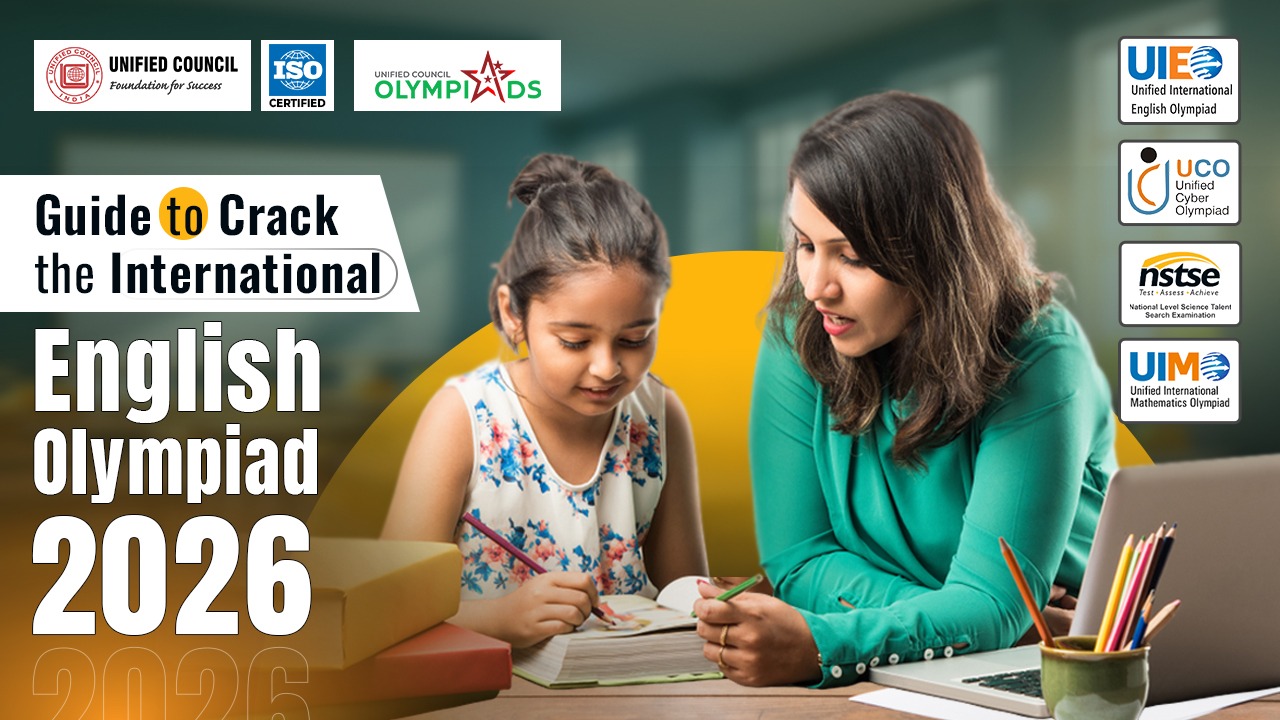
Guide to Crack the International English Olympiad 2026
Key Takeaways:
- Start with clarity: Understanding the exam format clearly is best for starting stress-free preparation.
- Consistency is key: Daily 60–90 minutes of structured practice will help students avoid last-minute studying.
- Developing a strong foundation: Success in Olympiads can be built through focus on vocabulary, grammar, and reading comprehension.
- Create exam-like conditions at home: Regular mock tests and previous-year papers is highly beneficial.
- Olympiads develop lifelong skills: Students gain stronger communication, reasoning, and writing abilities that support overall academic growth.
The IEO stands as one of the most prestigious English language competitions for students worldwide. With 2026 approaching, now is the perfect time to start preparing strategically. This step-by-step guide will help students and parents navigate the preparation journey with confidence and clarity.
Step 1: Understand the Exam Format
Before diving into preparation, it's essential to understand what the exam tests. The olympiad evaluates multiple language skills:
- Reading comprehension – Understanding passages and extracting information
- Grammar and vocabulary – Applying language rules correctly
- Writing skills – Expressing ideas clearly and coherently
- Verbal reasoning – Using language to solve logical problems
- Literature awareness – Familiarity with literary devices and concepts
Download previous year question papers and take a diagnostic test to identify strengths and weaknesses. This creates a roadmap for focused preparation.
Step 2: Create a Realistic Study Schedule
- Dedicate the first 2-3 months to vocabulary and grammar fundamentals
- Focus next 2-3 months on reading comprehension and verbal reasoning
- Reserve the final months for intensive mock tests and revision
- Block 60-90 minutes daily for consistent preparation
Step 3: Build Vocabulary Systematically
- Learn 10-15 new words daily with meanings and sample sentences
- Maintain a dedicated vocabulary notebook for regular review
- Study word roots, prefixes, and suffixes to decode unfamiliar words
- Use flashcards or vocabulary apps during breaks
- Practice using new words in daily conversations
Step 4: Master Grammar Through Practice
Grammar rules need consistent practice to become second nature. Focus on commonly tested areas:
- Tenses and verb forms
- Subject-verb agreement and sentence structure
- Active-passive voice
- Articles, prepositions, and conjunctions
Solve 20-30 grammar exercises daily and maintain an error log to avoid repeating mistakes. Understanding why an answer is incorrect is more important than just knowing the correct answer.
Step 5: Develop Speed Reading Skills
- Practice reading diverse content for 30-45 minutes daily
- Summarize the main points in your own words after reading
- Answer comprehension questions under timed conditions
- Gradually increase speed without sacrificing understanding
- Use the pointer technique to maintain focus while reading
Step 6: Practice with Previous Year Papers
- Set a timer matching the actual exam duration
- Create exam-like conditions with no interruptions
- Score honestly and analyze every mistake thoroughly
- Solve at least 10-15 previous year papers before the exam
- Note recurring question types and focus on weak areas
Step 7: Take Regular Mock Tests
- Take one full-length mock test every two weeks initially
- Increase frequency to weekly tests in the final two months
- Spend equal time analyzing test performance as taking it
- Identify time management issues and weak sections
- Adjust preparation strategy based on mock test results
Step 8: Sharpen Verbal Reasoning Skills
- Practice analogies, coding-decoding patterns, and series completion
- Solve puzzles and brain teasers regularly
- Dedicate specific days to reasoning practice
- Learn shortcut techniques for common question types
- Focus on identifying patterns quickly
Step 9: Prepare for the Writing Section
- Write one essay or paragraph weekly on varied topics
- Practice different formats: stories, letters, descriptive writing
- Focus on strong opening and closing sentences
- Maintain logical flow of ideas with varied vocabulary
- Get feedback from teachers or parents on written work
Step 10: Master Exam Day Strategies
- Do a light revision in the final week, and avoid new material
- Get adequate sleep and keep all materials ready
- Read instructions carefully before starting
- Attempt easier sections first to build confidence
- Mark difficult questions and return to them later
- Reserve 5-10 minutes for reviewing answers
Support from Parents
Parents play a crucial support role in this journey. Create a distraction-free study environment at home and encourage consistent effort without excessive pressure. Monitor progress without micromanaging and ensure a balanced routine with recreation time. Celebrate small milestones to maintain motivation throughout the preparation period.
Final Thoughts
Following these steps systematically transforms Olympiad preparation from a daunting task into an achievable goal. Success in the International English Olympiad requires dedication, smart preparation, and consistent effort. The skills developed during preparation extend far beyond the competition, building communication abilities that benefit students throughout their academic and professional lives.
Start with Step 1 today and progress steadily through each phase. With the right approach and persistent effort, cracking the olympiad becomes not just possible, but probable.
Frequently Asked Questions (FAQs)
1. How many hours daily should be dedicated to Olympiad preparation?
For most students, 60-90 minutes of focused daily practice works best, allowing coverage of all topics without causing burnout. Quality of practice matters more than quantity – focused sessions with proper analysis yield better results than long, distracted study hours.
2. What if certain grammar concepts remain confusing despite practice?
Try learning from different sources like alternative books or videos, join study groups where peers discuss difficult topics, or seek help from teachers. Breaking complex concepts into smaller parts and practicing them separately makes them easier to grasp.
3. Can preparation for the olympiad help with regular school performance?
Absolutely! The improved vocabulary, reading comprehension, and grammar skills naturally enhance overall English performance across all subjects. Many students notice their school grades improving as Olympiad preparation progresses.
.jpg)
.jpg)